Aug 2, 2023
HOME
Thumbnail 1
Thumbnail 4
Thumbnail 2
Thumbnail 5
Thumbnail 8
Thumbnail 6
Thumbnail 9
Slide
Slide
Thumbnail 10
previous arrow
next arrow
Thumbnail 1
Thumbnail 4
Thumbnail 2
Thumbnail 5
Thumbnail 8
Thumbnail 6
Thumbnail 9
Thumbnail 10
previous arrow
next arrow
More Details
May 12, 2022
Cerud sensitization

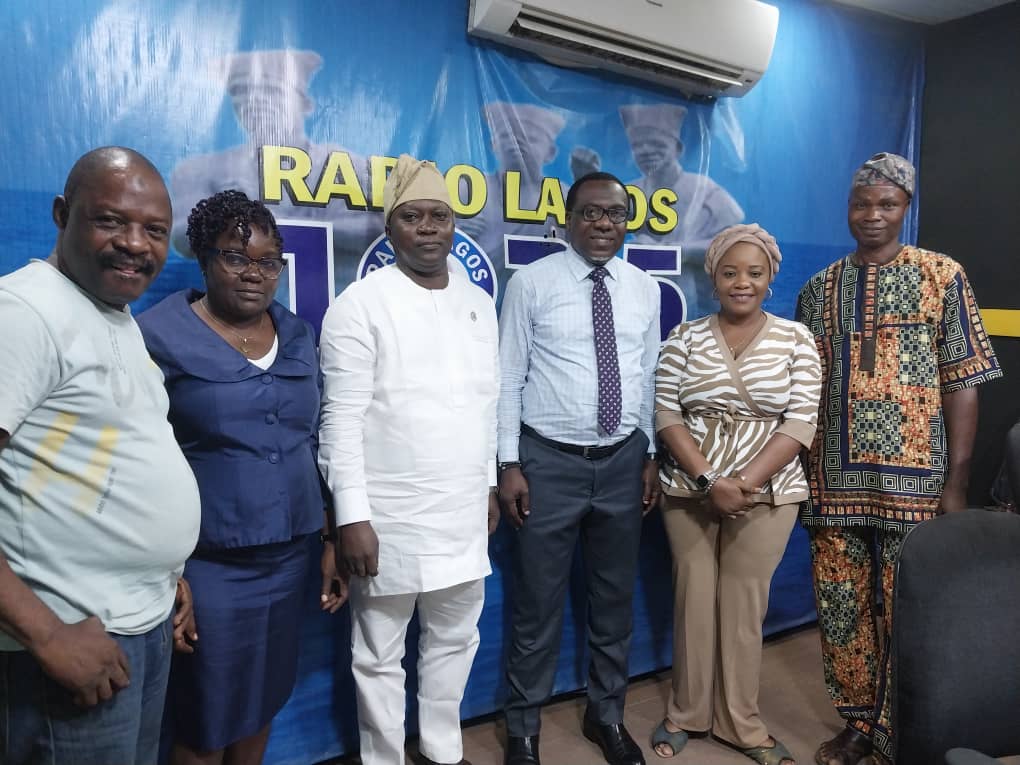
A group photograph with The Director/CEO, Centre for Rural Development, CERUD Accountant and the GM Radio Lagos Mr Jide Lawal at Radio 107.5 Fm Studio to sensitize Lagosians on the need to take advantage of the ongoing voters’ registration exercise by INEC.

More Details
Apr 25, 2022
COLLABORATIVE ENGAGEMENT WITH OTHERS

Some collaborative engagements in this respect are listed below:

  1. COCOA RESEARCH INSTITUTE OF NIGERIA (CRIN): (a)Staging of awareness creating workshop on “Harnessing the Economic Potentials of Kola Utilization for Rural Entrepreneurship Development and Employment promotion in Lagos State” (b)On-farm Demonstration on the Utilization of Kola Pod Husk (KPH) in Poultry feeds formulation at the KGK farms, in Imota LCDA. This collaboration led to the construction of a Kola Pod Husk Cottage Mill in Igbokuta, to improve the income generating capacities of the kola nut farmers and processors in Lagos State. The cottage mill is to grind dried KPH and process its by-products to usable forms such as snailery feed, organic manure, poultry feed, liquid detergent, kola wine, kola fortified chocolate etc
  2. RAW MATERIALS RESEARCH AND DEVELOPMENT COUNCIL (RMRDC): An “Investment forum for Rural Entrepreneurs” was mounted by the Centre in collaboration with the Lagos State Liaison office of Raw Materials Research & Development Council
  3. SKILLS ACQUISITION PROGRAMMES/HEALTHCARE WORKSHOP: The Centre organizes regular capacity building workshops/seminars in collaboration with Rural Helpers Foundation, which is an NGO and other relevant groups for rural dwellers in Lagos State. Some of the skills include: production of stove thread, Households chemicals such as Izal, Insecticide, Paint (emulsion, gloss, text-coat etc), tie & dye, cane furniture, catering services, bead making etc
  4. PAX HERBAL CLINIC AND RESEARCH LABORATORY, IN EDO STATE: The engagement is on further developmental work on the setting up of the Plant Nursery for raising medicinal plant species at the Centre in Igbodu, Epe. And for the Centre to raise in large quantities the plant spp called Rawolfia vomitora and other plant spp useful in the medicinal field
  5. COLLABORATION WITH TRADITIONAL MEDICINE BOARD and other relevant MDAs such as agric (LASCODA, FORESTRY, FISHERY, LASU) etc : this is on establishment of plant plantations, ochard field, ornamental plant spp, as well as in the area of horticultural activities
  6. UNIVERSITI SAINS MALAYSIA: The Centre collaborated with USM on the staging of a training workshop on “Inventory of Flora and Fauna of the landed area belonging to cerud, which part of it have been used for the establishment of a rural botanical park.
More Details
Apr 13, 2022
Cerud New works

The Centre is carrying out a sensitization programme across the rural communities of Lagos State to create awareness for the rural dwellers of their civic right, and the need for them to actively participate in the up coming elections in Y2023, and the need for registering and obtaining their PVC

NOTE PLEASE
If you are a registered voter, check your status via link below. It is seamless, innovative and reliable. Simply Select your:
1.) State
2.) Surname and
3.) Date of Birth
http://voterreg.inecnigeria.org
If your details are not in the database please go and register. Please, help circulate widely👍

http://voterreg.inecnigeria.org/

More Details
Mar 16, 2022
RESEARCH STUDIES/SURVEYS

Some of the research studies carried out by the Centre is:

  1. RURAL RESOURCES IN LAGOS STATE.

(An expository study) 2009.

  • WASTE MANAGEMENT IN LAGOS STATE: A REVIEW OF ATTITUDINAL WAYS, PROBLEMS, CHALLENGES AND THE WAY FORWARD : -The study highlighted the problems of waste management in the State. This is for the use of relevant authorities or agencies on the need and ways of tackling refuse and waste management issue. It is to forestall the continuation of the currently observed ugly consequences of environmental pollution in the State. The essence of the study is to encourage a change of attitude of the citizenry in indiscriminate disposal of refuse, provide cleaner environment, reduce incidence of flooding through dumping of refuse in drainages and the water-ways

2008.

  • CANE BELT SURVEY IN LAGOS STATE: The focus of this survey is on Raffia plant spp. and the stilt-rooted shrubs of the mangrove forest of the Lagos State that are of immense economic value through their fabrications into various forms of household furniture. The survey identified problems of Cane production in the State. It evaluate the quantity of Cane materials produced and carried out mapping of the spatial distribution of the Cane plant. The relevant socio and demographic attributes of the users of the cane were obtained to determines their present baseline data. The strategies for sustainable exploitation of the plant spp. and the framework for cultivating the plant, which was found to be a natural endowment were investigated. The required skills for adding value to the plant were also examined.

(An expository study)

  • A REVIEW AND UPDATE OF BASELINE SURVEY OF SOCIO – ECONOMIC INFRASTRUCTURE IN LAGOS STATE. 2006:
  • IDENTIFICATION / DOCUMENTATION OF EXISTING CRAFTS INDUSTRIES AND ACTIVITIES IN LAGOS STATE. 2007: The study set out to identify all existing artisans and craftsmen trade types in Lagos State and their activities for necessary policy development in order to assist in the development of that sector of the economy.
  • BASELINE SURVEY OF THE SOCIO – ECONOMIC INFRASTRUCTURE IN LAGOS STATE.

(Emerging Trends in Rural – Urban Development) 2006. This was done with a view to monitor and evaluates the trend in a socio – economic indices of the rural areas of the state over time; for rural planning purposes.

  • PROBLEMS AND PROSPECTS OF RURAL AND RIVERING TRANSPORTATION ON FOOD PRODUCTION IN LAGOS STATE
  • DIAGNOSTIC SURVEY OF KOLA BELT OF LAGOS STATE.

(An expository survey of kola production) May 2005. The kola belt survey carried out by the Centre revealed the tonnage of kola produced in Lagos State and its annual value, marketing, product disposal methods, management techniques, constraints and problems of kola production, ways and means of adding value to kola production and its by-products, and a list of all kola growing communities in the State.

  • RURAL – URBAN CLASSIFICATION OF COMMUNITIES IN LAGOS STATE.

This study involved “on the spot” assessment of communities in Lagos State and their classification into rural, semi – urban and urban; using internationally recognized criteria. The study is for the use of relevant Agencies/ Departments of the State Government with a view to assisting policy makers in their rural development programs.

  1. SOCIAL-ECONOMICS SURVEY OF IGBOKUTA COMMUNITY, 2006
  2. INVESTMENT OPPORTUNITIES AND PROTOTYPE DEVELOPMENT PROJECTS STUDY VOL. I AND II
  3. PRACTICAL APPROACHES TOWARDS IMPROVING INDIGENOUS TECHNOLOGY
  1. A Technical Guide for the Maintenance of Rural Infrastructure in Lagos State
  2. A Study of Investment Opportunities and Prototype Development Projects (2 volumes)
  3. Socio-Economic Implications of Revenue Generation from Agricultural Commodities Trades in Lagos State: The desirability of sourcing revenue from the already threatened agricultural economy of the state was the focus of this study. The study revealed that the State Government could conservatively generate additional internal revenue from; (a) numbers of trucks/trailers entering Lagos State daily (b) wholesalers/depot owners (c) other private individuals engaged in agricultural commodity trade. The study further revealed that this could be done without much strain on the resources or income of these identified groups in the agricultural commodities market chain
  4. Establishment of a multi-purpose kph (based) cottage mill at igbokuta, in lagos state.  It serves the purpose of training and re-training of farmers or rural youths on many agric enterprises such as goat and sheep, snailery and piggery. The mill also is equipped with machinery for grinding, crunching,and mixing of animal feed etc.
  1. SOCIO-ECONOMIC IMPLICATIONS OF REVENUE GENERATION FROM AGRICULTURAL COMMODITIES TRADES IN LAGOS STATE..
  2. BASELINE STUDY OF THE SOCIO – ECONIOMIC AND CULTURAL CONDITION OF RURAL AREAS OF LAGOS STATE.

This study was first carried out in 1991 as a “benchmark” study to assess the “state of the art” in rural Lagos. The report is reviewed every four years.

6. AGRO BEE KEEPING PROJECT

The Ago Honey-Bee project of the Centre was established in Y2005 purposely to enhance the income generating capacity of the rural dwellers. It is to create additional income generating activities on the farm for farmers. The project has underwent so much development or upgrade in recent times and a total of Seventy (70) kenyan top bar hives have been set at the apiary in Igbodu, CERUD complex in Epe area of Lagos State.

7. A Survey Study on Problems and Prospects of Rural and Riverine Transportation on Food Production in Lagos State The objective of this study was to shed light on the vast resources (especially in terms of food production) of rural and riverine communities in Lagos State, and how those resources could be harnessed for the overall development of the State. The study also determined the general condition of the existing rural roads and riverine transportation in the State, identified their problems and prospects.

More Details
Mar 16, 2022
Promotion of Rural Non-Farm Employment

Cerud

This is another area of focus by the Centre. It is a policy-shift; because of the erroneous believe that average rural dwellers are farmers. And this is being done to satisfy the objective of catalyzing the rapid development of the craft industries based on the appropriate technologies in the rural areas.

Capacity building/Training workshops are being carried out at its complex in collaboration with private group(s) as well as relevant MDAs and this include:

  • Practical training in the production, packaging and sales of standardized chemicals such as perfumery; Disinfectants; Body oil/grease; Detergent stove thread etc.

Phase-wise training programmes were ran at the CERUD training room and it commenced in Y2014 till date. So far and average of Thirty-eight (38) trainees have participated in the programme per phase

  • Practical training in the production, packaging and sales of standardized ‘’2 X 2’’ Asbestos

These was equally ran in phases and since the training started in 2014, an average of Fourteen (14) participants attended each phase

  • Workshop for Rural Artisans (Block molding, Ice block production & sales), Vulcanizing etc.

This particular training programme was last held in Ajeromi-Ifelodun axis of the State some years back. It was a well-attended training. However, plans are on to ensure the staging of it in the Epe division as soon as possible.

In the same vein, the Centre has equally been able to bridge the supposed gap in the ICT (Information Communication Technology) compliance in the rural Lagos through her several phase-wise short courses in Computer appreciation and internet exploring skills. This ICT training is being held at the ICT unit of CERUD in Igbodu, EPE. The target groups in the last three (3) years include:

  • Young school leavers resident in the Epe division
  • Public secondary (both Juniors & Seniors) schools
  • Public secondary school Principal, head teachers and other categories with minimum basic qualifications.

Well over 1,250 rural youth have benefited from the ICT training so far

Other Capacity Training programme being organized by CERUD at its complex in Igbodu Epe includes:

  • Apiculture management (Agro-honey production, processing and packaging)
  • Fisheries
  • Crop production/Establishment of plantations etc

Tourism

The Centre has several educative projects which are providing beautiful serene for visitors to the complex. Notable amongst these is the Lagos State Rural Botanical Park with appendages such as:

  • Plant Nursery Point where plant propagation and domestication activities do take place. Several seedlings of plant species; ornamentals, medicinal, crops, timbre etc. do take place
  • Herbarium: Plant library for further research on plant spp
  • Maintenance of Plantations such as ‘’Yellow cassava’’ (Manihot spp.) which is a hybrid fortified with Vitamin A

-Ochard field

-Bitter leaf

-Mahogany

-Timbre Tree spp. etc

  • Recreation point and several rest points for relaxation
  • Guest houses for use of the visitors

More Details
Mar 16, 2022
APICULTURE (HONEY BEE PROJECT)

APICULTURE (HONEY BEE PROJECT)

CERUD is promoting Apiculture management among the State’s rural farmers, because of the relative usefulness of the products to humanity. There is no doubt that honey is in high demand in the Country, hence the need to improve on its production activities to increasing the volume currently being produced and to enhance adequate training/capacity building for interested  farmers and youths.

The act of Bee keeping for honey production (& other by-products) using artificial means such as hives is refered to as APICULTURE. A portion of land set aside for practicing apiculture is called an Apiary. In other words, Beekeeping is the practice of intentional maintenance of Honey-Bee colonies in hives by human beings. This is done in order to harness their products for food and income, as well as facilitating effective pollination for farmers’ crops to increase the quantity and quality of their farm yields. In effect, Bee-keeping can engender meaningful rural development, healthcare, economic empowerment, poverty reduction, diversification of income generating activities and improve standard of living.

The Centre for Rural Development (CERUD) commenced its beekeeping project (Apiary), in September 2005 at the project site of the Nigerian Institute of Oil Palm Research (NIFOR) in Abia, Badagry. However, the Centre relocated the Apiary (Bee project) to its present location within CERUD Research Office Complex in Igbodu, Epe in 2018. This was because of the distance in maintaining the apiary & incessant cases of theft of the products by the people around the host community, since then the Project has being impacting positively on participating rural dwellers, farmer groups etc on quality honey production.

More Details